
Life Cycle Assessment and Circularity for sustainable buildings
We measure the environmental impacts of your project throughout its entire lifecycle to reduce carbon footprint, optimise materials and apply circular economy strategies aligned with Level(s) and the European Taxonomy.
Reply within 24 hours | Request a no-obligation quote | Technical and business-oriented approach
Understand the real impact of the building to design with less carbon and more circularity
The Life Cycle Assessment (LCA) allows the environmental impact of a building to be assessed from the extraction and manufacture of materials through to construction, use, maintenance, replacements and end of life. This methodology provides an objective basis for comparing solutions, reducing emissions and making design decisions with greater technical rigor.
The Life Cycle Assessment (LCA) allows the environmental impact of a building to be assessed from the extraction and manufacture of materials through to construction, use, maintenance, replacements and end of life. This methodology provides an objective basis for comparing solutions, reducing emissions and making design decisions with greater technical rigor.
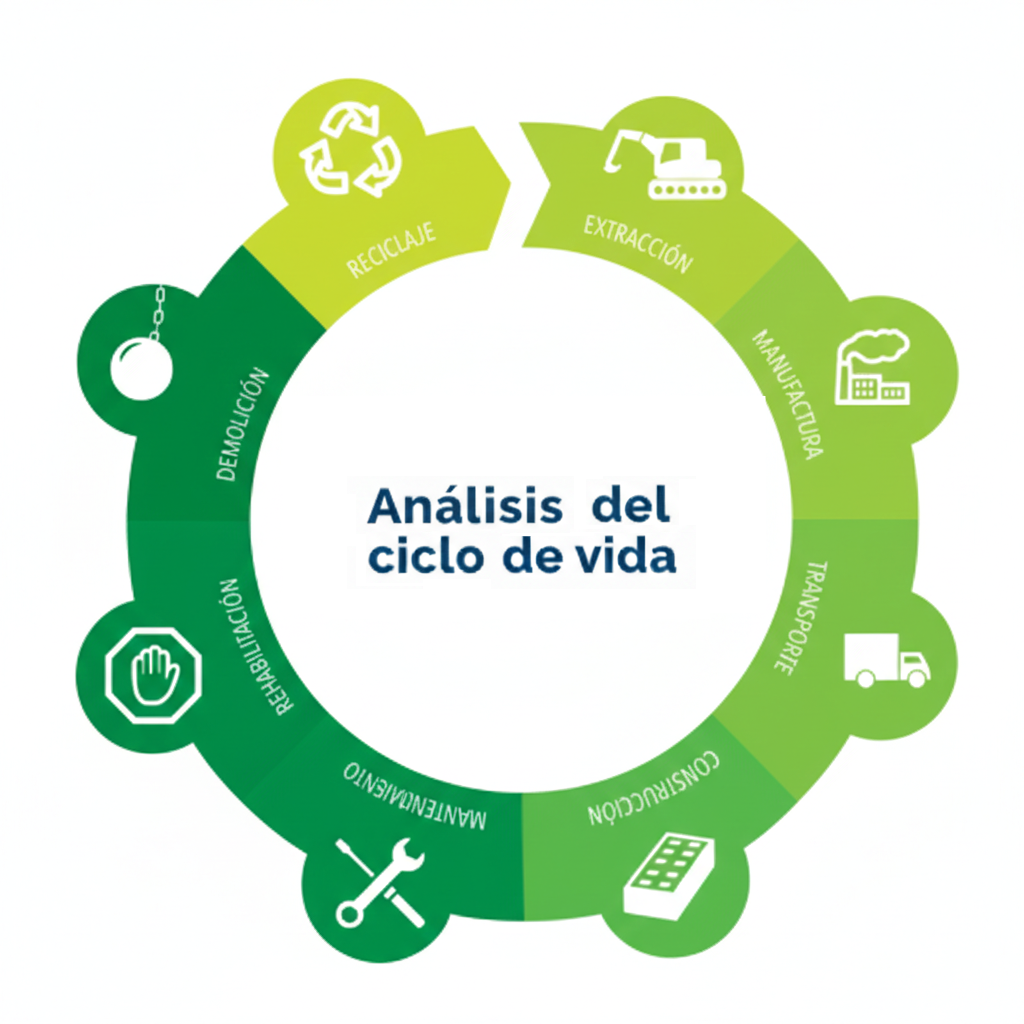
LCA is particularly relevant because the environmental impact of a building is not limited to its use phase. A significant part may be associated with materials, construction processes, replacements and the final management of components. Therefore, measuring the complete life cycle makes it possible to take action before design decisions become irreversible.
Furthermore, this approach aligns with regulatory developments and European sustainability frameworks. The Gesvalt reference highlights the progressive incorporation of the indicator GWP —Global Warming Potential— of the building throughout its life cycle within the framework of the CTE, with requirements planned from 2028 for buildings over 1,000 m² and from 2030 for all new buildings.
Why Evalore?
- We are a Specialist sustainability consulting applied to real estate.
- We have worked on offices, housing, hotels, educational centres, retail premises and industrial assets.
- We manage LEED, BREEAM, WELL, SITES and Passivhaus certifications with a technical, economic, and commercial focus.
- Our methodology has helped to achieve over €500,000 saved on investment costs in a large-scale BREEAM project.
- We increase the value of your assets through sustainability.
They already trust us.









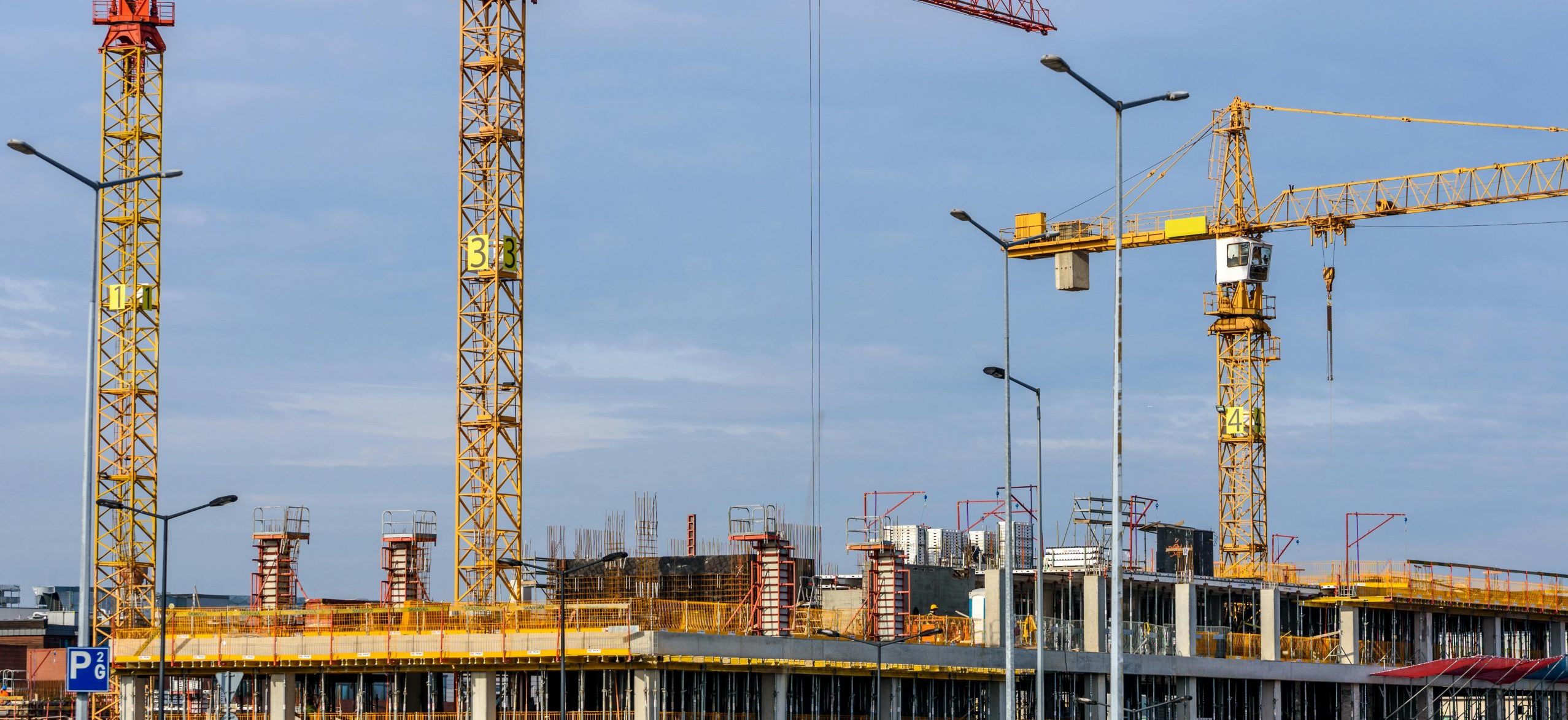
Reduce emissions, optimise materials and make data-driven decisions
LCA makes it possible to compare design and material alternatives with a comprehensive view of environmental impact. This information is key for developers, owners, investors and project teams who need to justify decisions, improve the sustainable performance of the asset and move towards lower-carbon construction.
Applied from early stages, life cycle assessment helps to prioritise solutions with the greatest impact reduction capacity. In refurbishment projects or operational assets, it allows improvement opportunities to be identified and strategies defined to reduce emissions, optimise resources and prepare the building for future sustainability requirements.
Success stories
We support national and international clients on projects where sustainability is a key consideration real value for the asset, users and investment.
Do you want to know more about LCA and circularity?
Discover how the Life Cycle Assessment helps to make more robust decisions in real estate projects: from material selection and emissions reduction to alignment with ESG criteria, Level(s) and European Taxonomy. We have selected key content to understand how to turn environmental data into a competitive advantage for your asset.
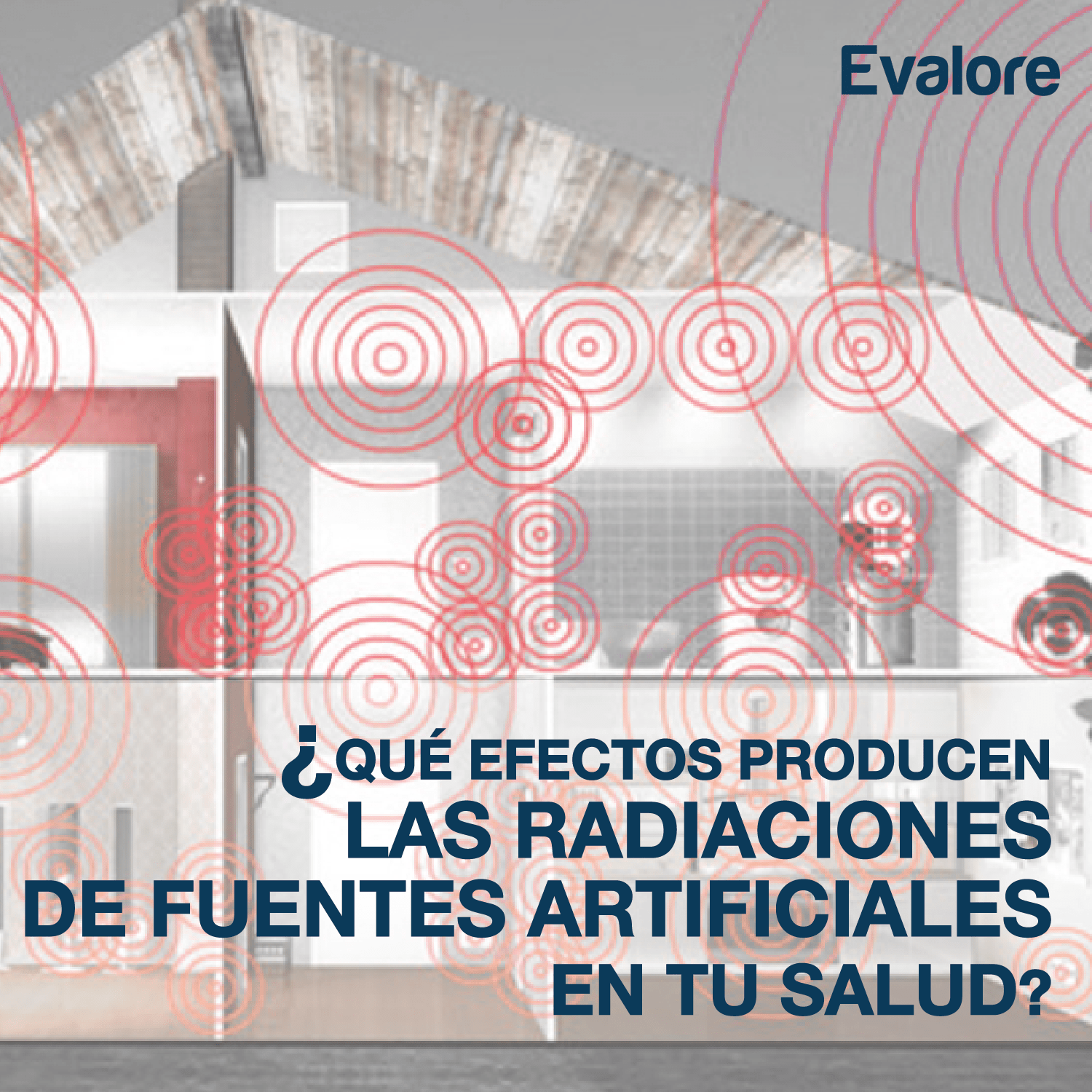
As mentioned in another of our articles, for over a hundred years we have lived under the belief that the radiation produced by electrical appliances was harmless...
The Earth is radioactive, and radiation is neither bad nor entirely harmful. Life itself exists through the electrical exchange between the environment and living beings...
Frequently Asked Questions about Life Cycle Assessment and Circularity
1. What is the Life Cycle Assessment of a building?
The LCA evaluates the environmental impacts of a building throughout its lifecycle: raw material extraction, manufacturing, transport, construction, use, maintenance, replacements, demolition and end-of-life. Evalore uses it to make data-driven design and material decisions.
2. What is the difference between an LCA and a carbon footprint?
The carbon footprint focuses on greenhouse gas emissions. LCA can analyse a broader set of environmental impacts, such as resource consumption, acidification, eutrophication, resource depletion or waste generation. In construction, it makes it possible to understand where the impacts lie and how to reduce them efficiently.
3. What is embodied carbon?
It is the carbon associated with construction materials and processes: extraction, manufacture, transport, construction, maintenance, replacement and end-of-life. Its weight is increasingly relevant because buildings are more efficient in operation, but still incorporate a significant impact in materials and construction.
4. When is it advisable to have a stroke?
The sooner, the better. In the initial phases, it allows for the comparison of structural systems, envelopes, materials and construction solutions before decisions are locked in. In advanced phases, it can be used to justify certifications, reporting, European Taxonomy or carbon reduction strategies.
5. Does the ACV help to reduce costs?
It can contribute to this if it is used as a decision-making tool. A good LCA does not consist of automatically choosing the material with the lowest impact, but of comparing environmental impact, cost, availability, durability, maintenance and end-of-life. Evalore approaches it from a cost-benefit logic.
6. How does LCA relate to LEED, BREEAM, Level(s) and the European Taxonomy?
Whole Life Carbon is increasingly present in European certifications, reporting and regulatory frameworks. It can help justify credits in LEED or BREEAM, align with Level(s), prepare information for the EU Taxonomy and anticipate future requirements on whole life carbon.
7. What is circularity applied to buildings?
Circularity seeks to make better use of resources throughout a building's lifecycle: lower waste generation, materials with a lower impact, greater durability, adaptability, disassembly, reuse and traceability. At Evalore, this is approached as a technical and economic strategy to reduce the risk of obsolescence and increase future value.
8. What deliverables does the client receive?
The client can receive a LCA model, alternatives comparison, identification of highest impact items, reduction recommendations, material criteria, carbon indicators and useful documentation for certifications, ESG reporting, European Taxonomy or communication with investors and clients.
Other services
Discover other solutions designed to help your company to to move forward with greater security, efficiency and strategic vision at each stage of the project.
Measure your building's real impact and turn it into a competitive advantage
Tell us the characteristics of your project and we will analyse how the Life Cycle Assessment and the circularity strategy can help you reduce embodied carbon, optimise materials, anticipate ESG requirements and align the asset with Level(s), EU Taxonomy and environmental certifications.