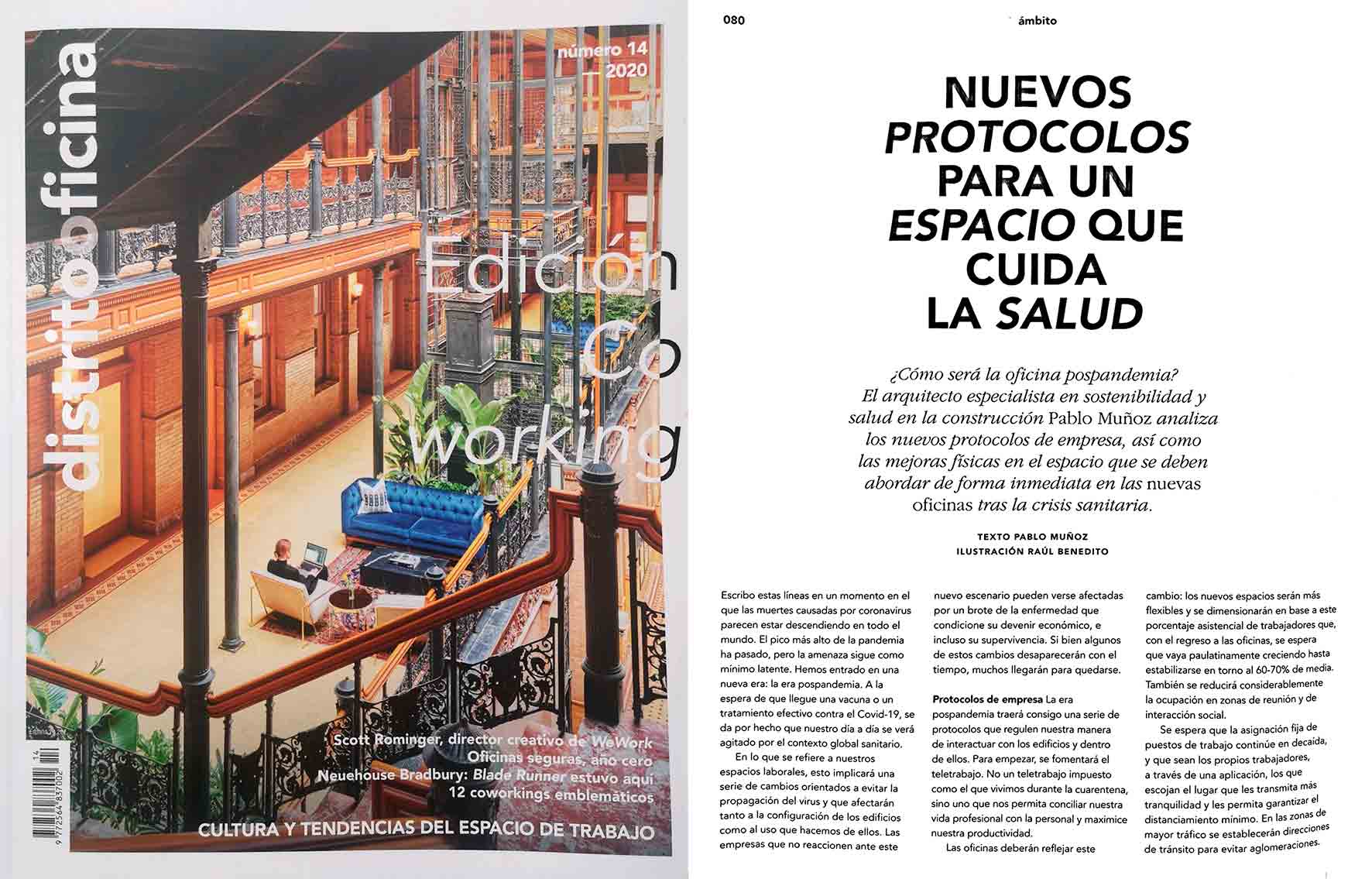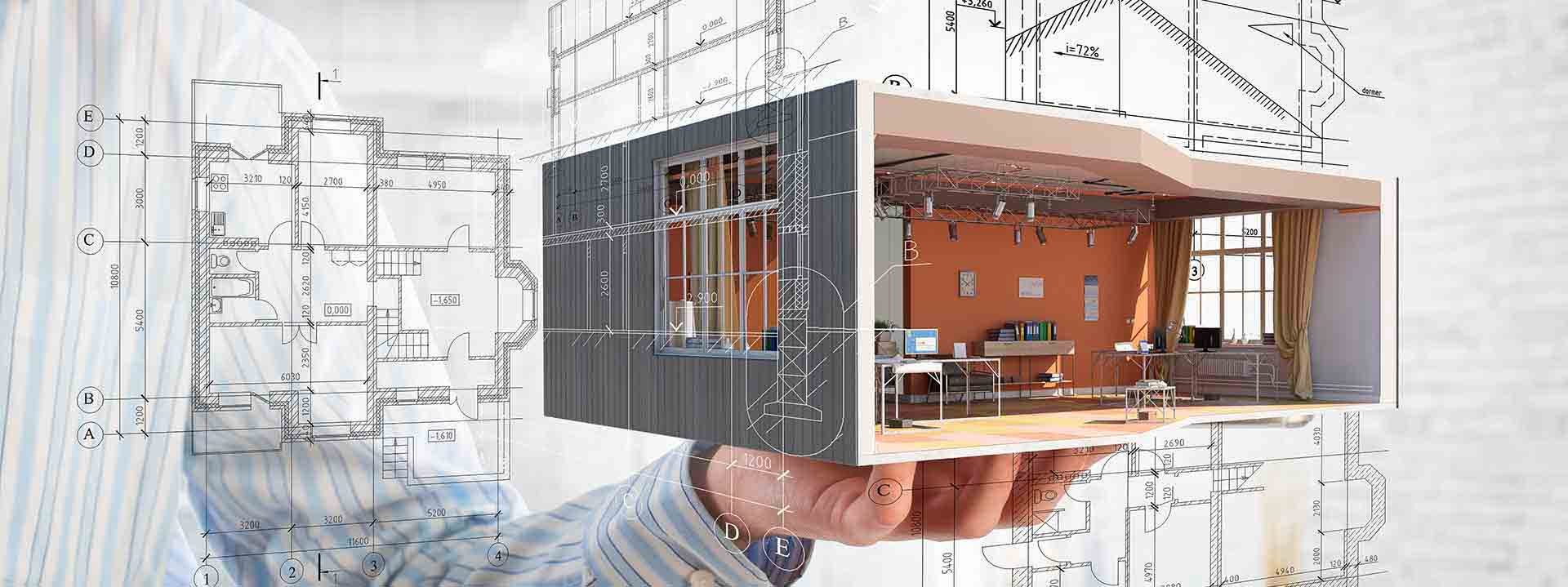
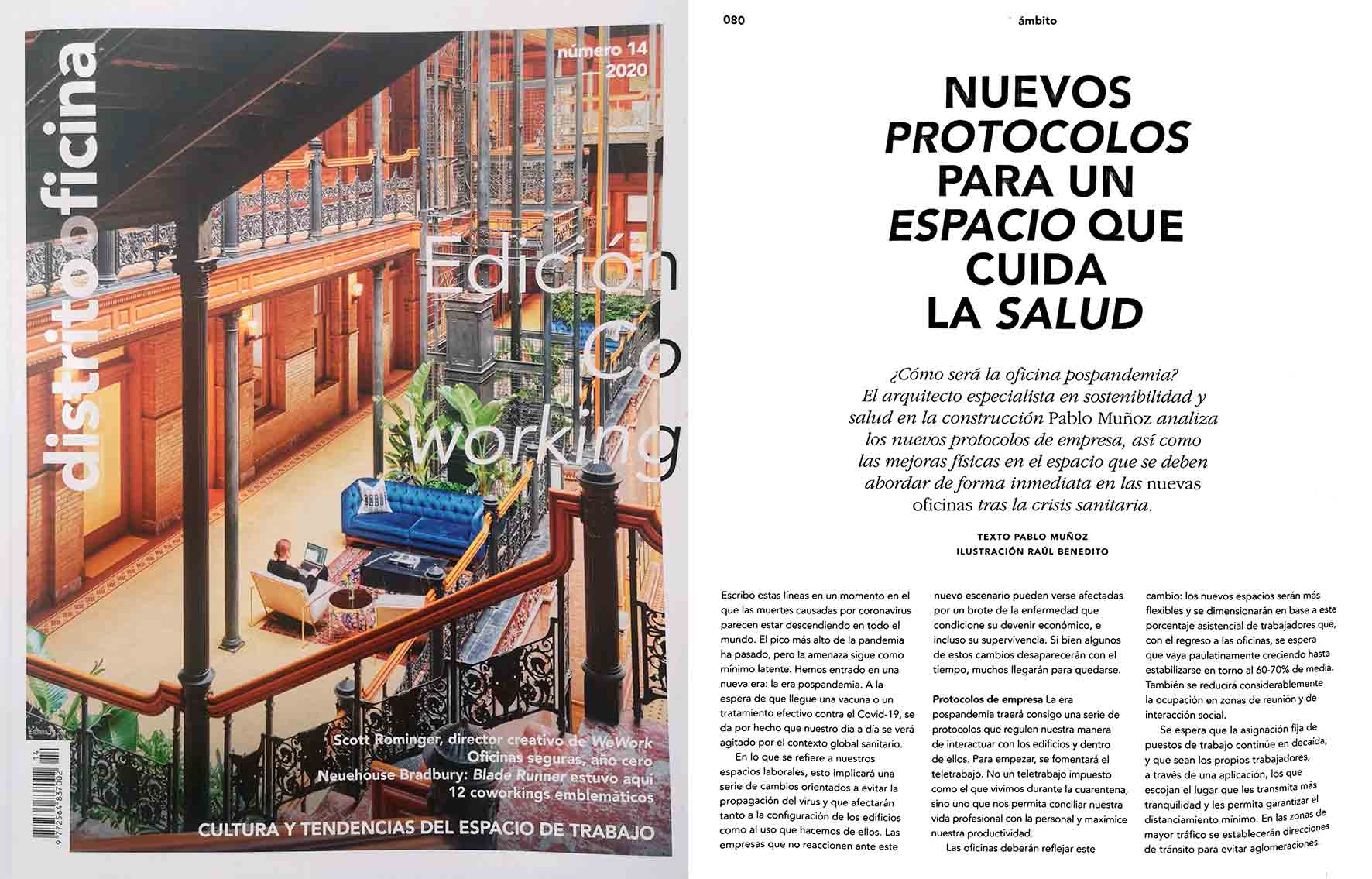
In its latest edition, the magazine Office District, specialised in showcasing trends in workplace design, has given us the opportunity to explain how we understand the post-COVID office. In this article we explain the set of protocols and physical adaptations applicable to workspaces that have proved effective in guaranteeing the health of workers in the current context. In the final paragraphs, a call is also made to use the current crisis circumstances as a lever for change, ushering in a new architectural era in which sustainability and health take on a leading role.
I am writing these lines at a time when deaths caused by coronavirus appear to be falling across the world. The highest peak of the pandemic has passed, but the threat remains at the very least latent. We have entered a new era: the post-pandemic era. While we wait for a vaccine or an effective treatment against Covid-19 to arrive, it is taken for granted that our day-to-day lives will be disrupted by the global health context.
When it comes to our workspaces, this will entail a series of changes aimed at preventing the spread of the virus, which will affect both the layout of buildings and how we use them. Companies that fail to react to this new scenario may be affected by an outbreak of the disease that could impact their economic future and even their survival. Although some of these changes will disappear over time, many are here to stay in the post-COVID office.
Company protocols
The post-pandemic era will bring with it a series of protocols regulating how we interact with and within buildings. To begin with, it will encourage remote working. Not a form of remote working that is imposed on us, as was the case during lockdown, but one that allows us to balance our professional and personal lives and maximise our productivity. Offices will need to reflect this change: the new spaces will be more flexible and will be sized according to this percentage of staff attendance, which, with the return to the office, is expected to grow gradually until it stabilises at around 60–70% on average. Occupancy in meeting and social interaction areas will also be significantly reduced.
Homeworking will be encouraged to help us balance our professional and personal lives and maximise our productivity
It is expected that assignment Fixed of jobs continue to decline, and that it is the workers themselves, through an app, who choose the place that gives them the most peace of mind and allows them to guarantee the minimum distancing. In the highest-traffic areas, traffic directions will be established to avoid crowding. Likewise, as a standard practice, there will be incorporated temperature measurement at building entrances. The temperature measurement devices at entrances will be accompanied by health kiosks that will dispense face masks and sanitising gel to visitors. Regarding cleaning, a cleaning protocol disinfectant that guarantees surface hygiene, especially for high-contact surfaces such as work benches, handles or commonly used electrical appliances.
The building utilisation protocols for the post-Covid return to the office will be accompanied by corporate wellbeing policies. These initiatives, which have proliferated in recent years, are integrated into the company culture and take the form of workshops, online training, and audio or video bites. The objective of these tools will continue to be to promote and protect the health, safety and wellbeing of teams, but in this case they will adapt their content to the current health context, helping us to lead a healthier life and strengthen our immune system. To this end, special attention will be paid to the areas of stress regulation in times of uncertainty, healthy eating at home and in the office, and the recovery and maintenance of an active life after lockdown.
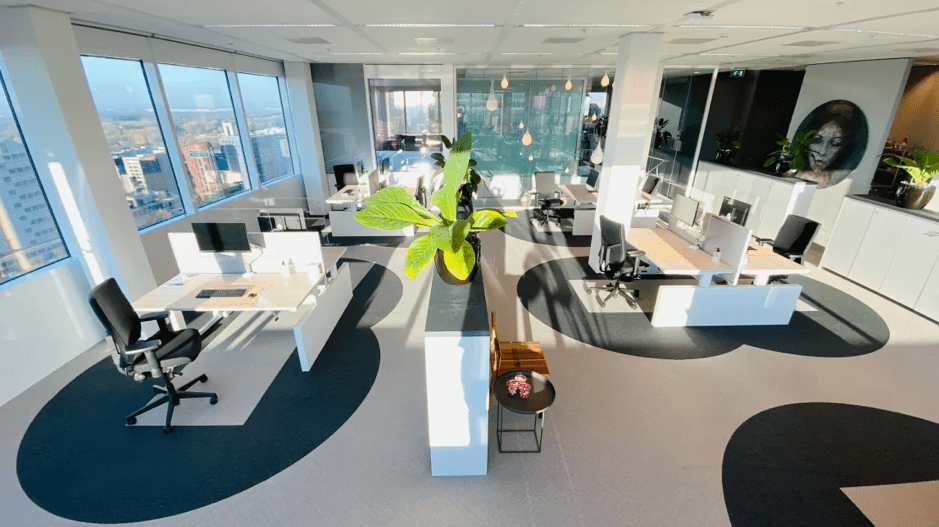
Image: weforum.org
PHYSICAL IMPROVEMENTS IN THE OFFICE SPACE POST-COVID
Technology will play a fundamental role in shaping post-Covid spaces. The presence of capacity monitoring sensors of spaces or the use of facial recognition systems, replacing the fingerprint for access, will be some new features. The proliferation of is also expected systems contactless via infrared for bins, taps or vending machines, and via voice recognition especially in lifts.
Having recently been shown that some virus microparticles can remain in the air for hours, the proper ventilation and the air quality monitoring they will play a fundamental role. Although it is not possible to measure the concentration of coronavirus in the air, parameters such as CO2 concentration, related to human presence, can guide us. Therefore, ventilation systems will be integrated with CO2 measurement systems. Likewise, the visual presence of screens informing us of the quality of the air we breathe will be commonplace. In fact, much like in this case, many of the measures to be implemented will be aimed at generating confidence among the users of our buildings.
correct ventilation and air quality monitoring will play a fundamental role
Optimised building ventilation will be complemented by the installation of purification systems, both within the mechanical climate and ventilation systems themselves, and independently in the rooms. These purifying and disinfecting devices capable of eliminating the virus from both the air and surfaces, and can be of different types: ultraviolet light systems, plasma technology systems or ozone systems (caution with the latter, as ozone is a substance that is potentially toxic to health; Evalore is advising against their use in all its projects). Ventilation, air quality monitoring and the use of purifiers are measures that must work together and therefore will be integrated into control systems by means of the IoT technology (Internet of Things).
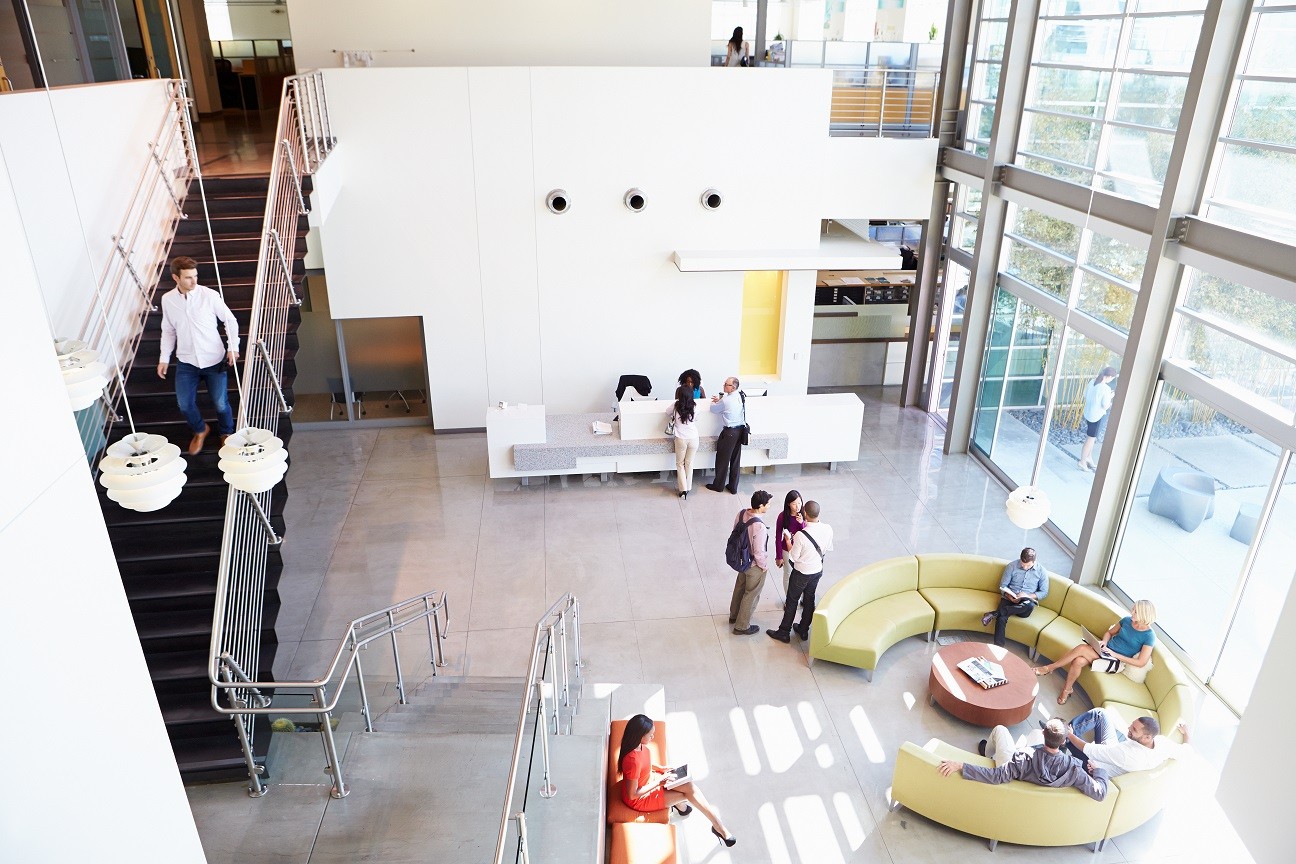
New considerations will emerge when physically configuring spaces to guarantee minimum distancing in the post-COVID office. lobbies, until now often looked down upon and categorised as residual spaces, will take on a new value and reach much greater dimensions. With regard to workstations, codes will be included in the form of demarcating furniture or paint on ceilings and floors that determine how far our safety zone extends. There will also be arranged screens and partitions, which as well as protecting us will provide spaces with greater acoustic comfort, giving us more privacy and reducing the reverberation time. The screens will be especially useful in meeting rooms and spaces where there is interaction between people, particularly those intended to receive people from outside the organisation.
The selection of viricidal building finishes and furniture it can also play a fundamental role when it comes to combating the spread of coronavirus. There are paints and furniture, featuring silver ion technology and antimicrobial additives respectively, that have the ability to eliminate the virus from their surface and whose use will become more common in the post-COVID office.
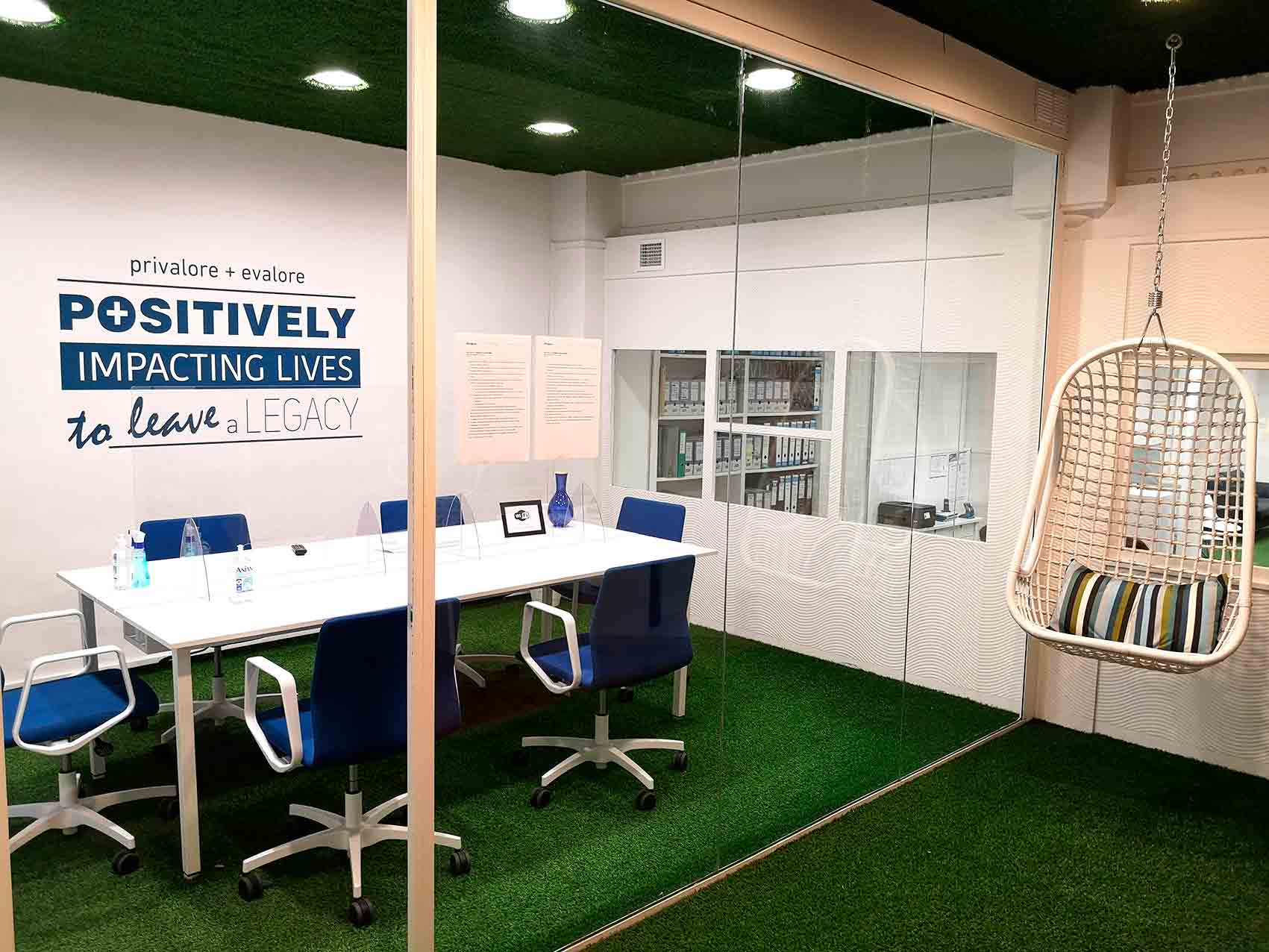
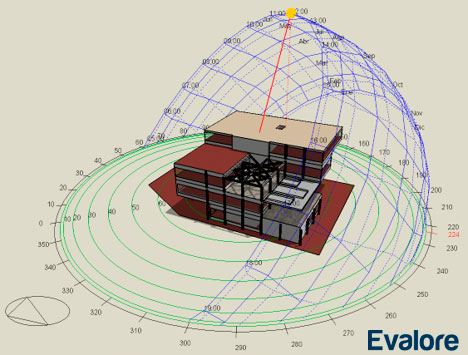
Image: evalore.es
PERCEPTION OF VALUE, HEALTH AND SUSTAINABILITY
Many of the changes will be aimed at improving the perceived value of space on the part of users. This fact is due to two fundamental reasons. On the one hand, it seeks to guarantee the user's perception of security, which contributes to their productivity and sense of belonging. Both factors have a positive impact on the company's competitiveness. On the other, this set of physical and procedural changes will help to increase user awareness of a global issue, which has an effect on collective responsibility. This ultimately has a positive impact not only on the company, but on society as a whole.
Therefore, standard international sustainability and health standards in building such as LEED, BREEAM and especially the WELL Certification are becoming increasingly important, as they have the capacity to highlight the quality of a built space. The WELL standard, for example, has already begun adapting its usual global building health parameters to incorporate measures aimed at preventing the spread of the virus.
The WELL Certification has already begun adapting its usual building health parameters to incorporate measures aimed at preventing the spread of the virus
In any case, what seems clear is that post-pandemic architecture in general, and office architecture in particular, will present substantial changes compared to the previous era. Much has been said about the opportunity for improvement born out of a crisis. While changes should not focus exclusively on combatting the spread of the current virus or preparing for a potential future pandemic, we have before us the opportunity to make structural changes that will lead to a long-term global improvement. At the architectural level, authorities, developers and architects must take the initiative and direct their efforts towards building better. This means building with a focus on human health, but also on the environment. We must not forget that it is human intervention in nature that causes most global crises. Environmental responsibility, in the form of radical building sustainability, must dominate the efforts for change. If not, nature itself, in all its force, will knock on our door once again.

Pablo Muñoz, CPHD, LEED GA, BPI MFBA
Co-founder and CEO of Espacios Evalore SLP