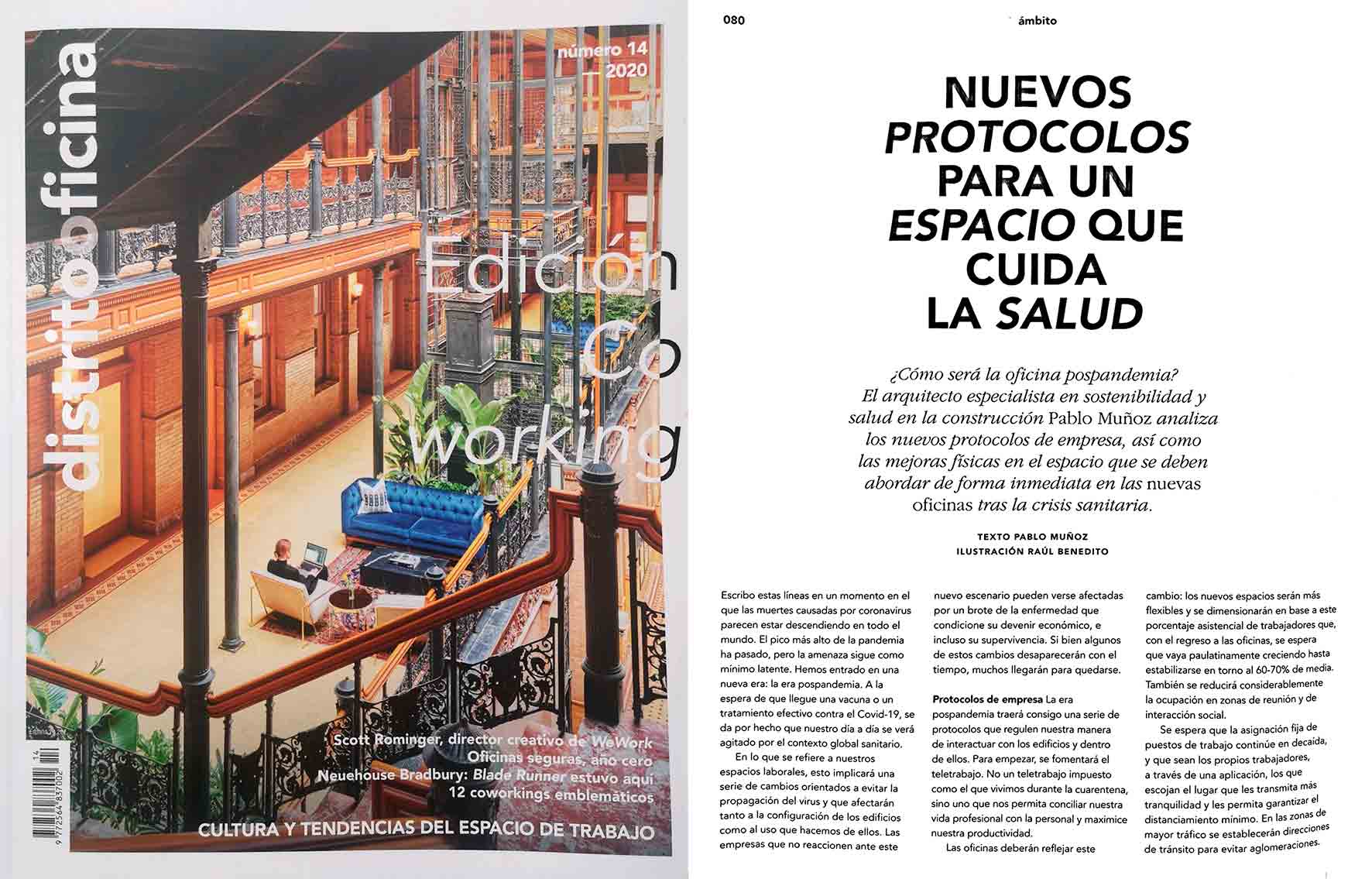
Recently the magazine Office District, which specialises in showcasing trends in workplace design, gave us the opportunity to explain how important it is for companies to carry out their activities in a healthy office. In the following article we explain how, through the implementation of wellness, companies can gain an advantage over the rest.
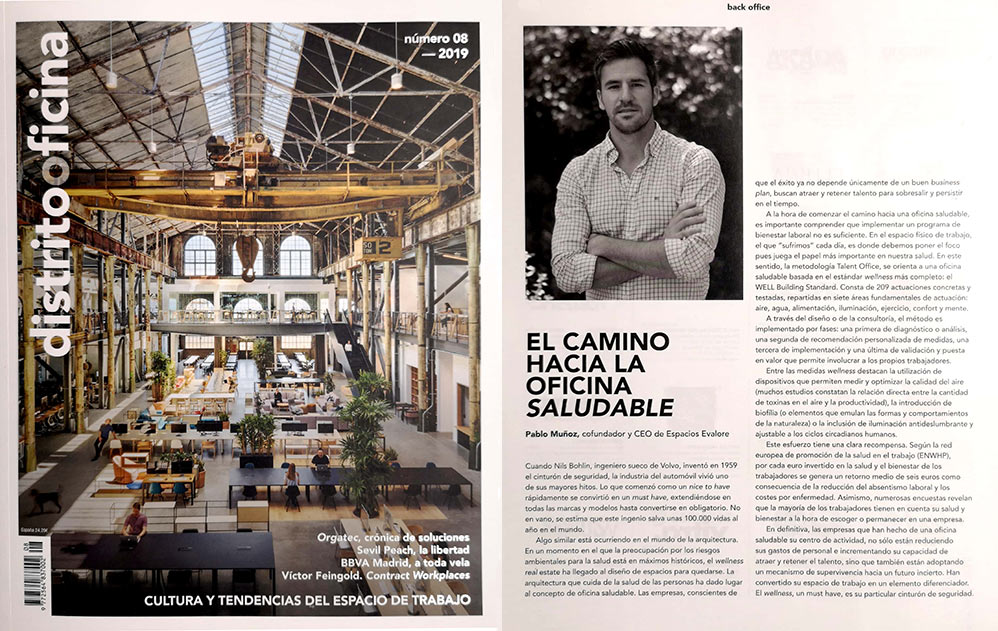
When in 1959 Nils Bohlin, a Swedish Volvo engineer, invented the seatbelt, the automotive industry experienced one of its greatest milestones. What began as a nice to have it quickly became a must-have, spreading across all makes and models until becoming compulsory in most developed countries. Unsurprisingly, it is estimated that this device saves around 100,000 lives a year worldwide.
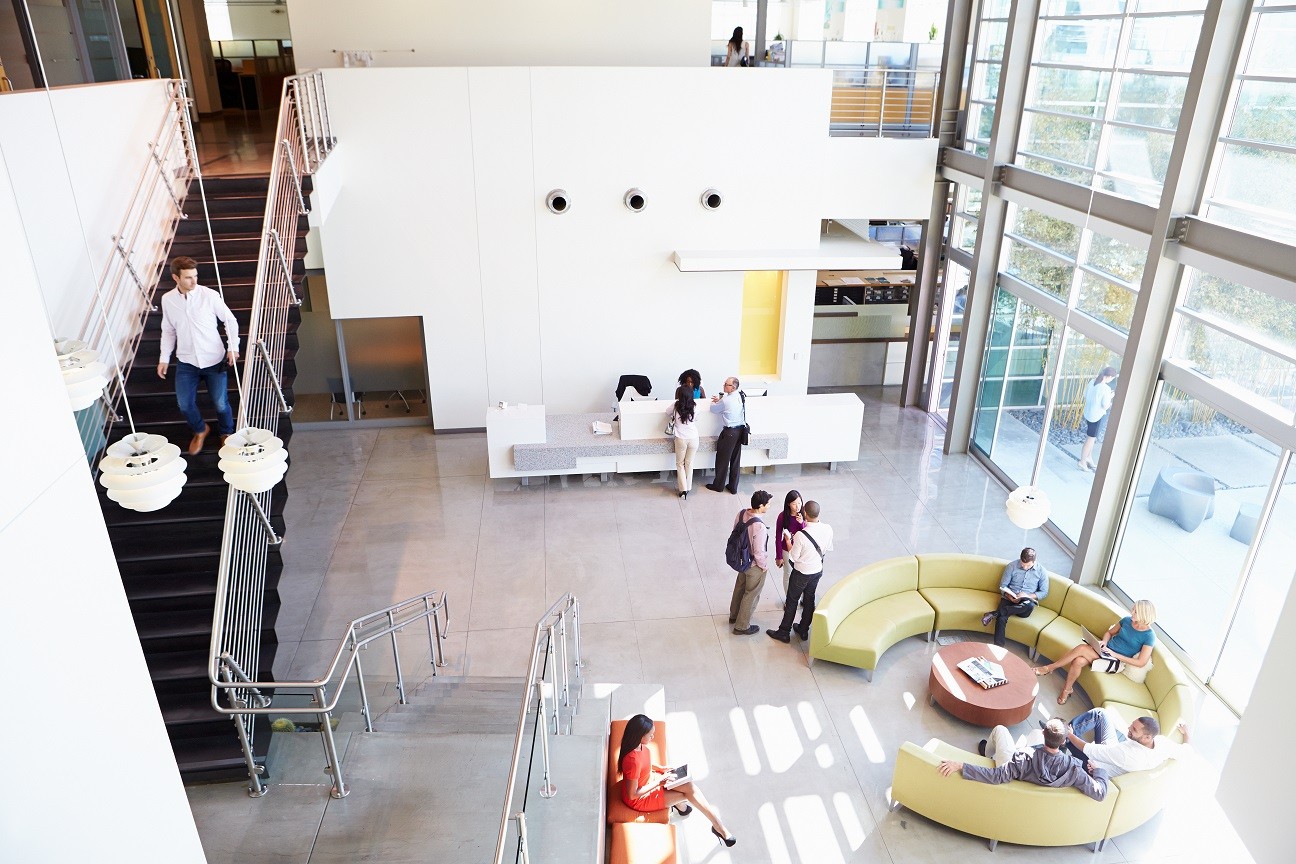
Something similar is happening in the world of architecture. At a time when concern for environmental health risks is at an all-time high, the wellness real estate has arrived at the concept of spaces to stay. Architecture that cares for people's health has given rise to the concept of the healthy office. Companies, aware that success no longer depends solely on a good business plan, they seek to attract and retain talent in order to excel and endure over time.
When starting on the path towards a healthy office, it is important to understand that implementing a workplace wellbeing programme is not enough. It is on the physical workspace, which we ‘suffer’ through every day, that we must focus our attention, as it plays the most important role in our health and wellbeing. To this end, at Evalore we have developed the methodology Talent Office, oriented towards a healthy office and based on the standard wellness more comprehensive: the WELL Building Standard (or WELL Certification) consists of 209 specific tested measures, distributed across 7 fundamental areas of action: air, water, nourishment, lighting, movement, comfort and mind.
For every euro invested in the health and wellbeing of workers, an average return of 6 euros is generated
Through architectural design or consultancy, the method Talent Office it is implemented in phases: a first diagnostic or analysis phase; a second phase of personalised recommendations for measures to achieve specific objectives; a third implementation phase; and a final validation and valorisation phase. In this last phase, communication plays a fundamental role, allowing us to involve the workers themselves in the differential value of working in a healthy office.
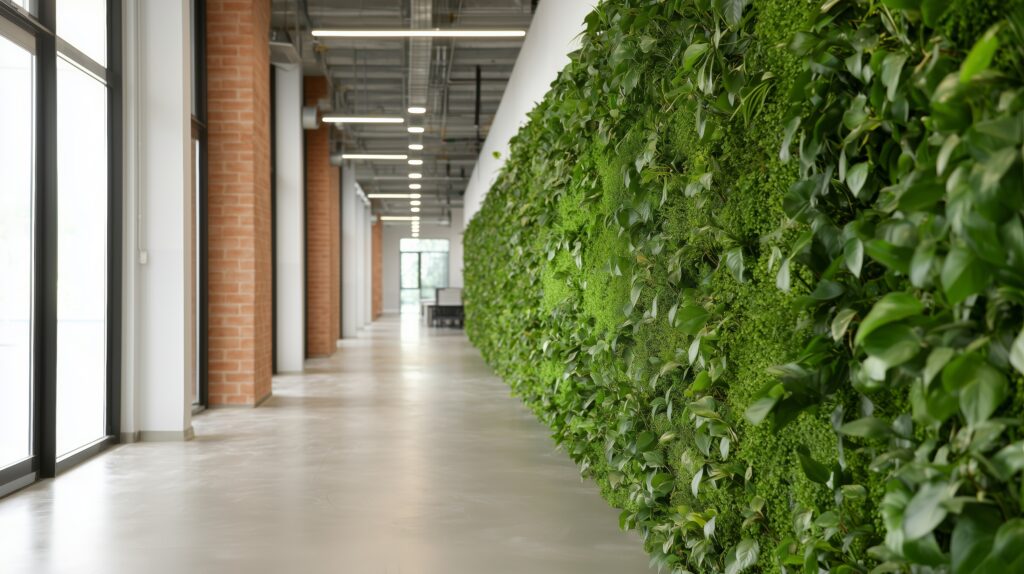
Among the measures wellness highlight the use of devices that make it possible to measure and optimise air quality (many studies confirm the direct link between the amount of toxins in the air and worker productivity), the introduction of biophilia (or elements that emulate the shapes and behaviours of nature) into the design, or the inclusion of anti-glare lighting that is adjustable to human circadian rhythms.
This effort has a clear reward. According to the European Network for Workplace Health Promotion (ENWHP), for every euro invested in the health and wellbeing of workers, an average return of 6 euros is generated as a result of the reduction in sickness absence and illness costs. Furthermore, numerous surveys reveal that the majority of workers take their health and wellbeing into account when choosing or staying with a company.
Ultimately, companies that have made a healthy office their hub of activity are not only reducing their personnel costs and increasing their ability to attract and retain talent, but they are also adopting a survival mechanism for an uncertain future. They have turned their workspace into a differentiating element. wellness, a must-have, it is their particular seat belt.

Pablo Muñoz, CPHD, LEED GA, BPI MFBA
Co-founder and CEO of Espacios Evalore SLP